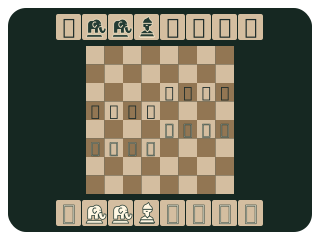
Sittuyin is played by 2 players on a board with 8 × 8 squares. White moves first. Deploy your army behind staggered pawns, then play Burmese chess with its special promotion rule.
Sittuyin is the traditional chess of Myanmar (Burma), played on an 8×8 board. Players deploy their own pieces before moving. Pawns start in staggered rows, and players take turns placing their other eight pieces within their own first three ranks, with rooks on the back rank. The elephant and general step one square. A pawn can become a general only when you have none left. Checkmate wins. This guide covers Sittuyin. Check the movement, capture and game-ending rules below before applying rules from another variant.
Game illustration. Follow the setup instructions to prepare a new game.
Pawns are already placed in two staggered rows. Players alternate placing their eight reserve pieces, one per turn, on empty squares in their own first three ranks; rooks must be on the back rank. Traditionally one side places all its pieces before the other; ChessPlayX uses alternate placement. Normal movement begins after deployment.
Board
8 × 8 squares
Players
2
First move
White moves first.
Rules used here
Sittuyin
02Moves and captures
Legal moves
King, rook and knight move as in chess. The elephant steps diagonally or forward; the general (met) steps diagonally, one square. Pawns advance one square and capture diagonally. Captured pieces do not return to the reserve.
Using the board
To place a reserve piece, select it and then a marked square. For a board move, select your piece and its destination. When a move has several options, such as which piece to promote to or whether to promote, choose one in the panel that opens.
03Special rules
With no general remaining, a pawn on a promotion diagonal may become a general; a player's sole remaining pawn may do so anywhere.
Promotion spends a turn in place or moving one diagonal step, and may neither capture nor attack an enemy piece.
There is no castling or pawn double step.
04Winning and draws
Checkmate wins.
On ChessPlayX stalemate is a draw; traditional Burmese rules instead forbid stalemating the opponent.
A player left with only king and one pawn whose only legal moves are promotions may claim a draw.
A draw may also be claimed after 50 moves by each side without a capture or pawn move, or on threefold repetition, and a position where neither side can checkmate is drawn automatically.
Counting: when one side has only its king and no pawns remain, the attacker must mate within 16 moves with a rook, otherwise 44 with an elephant, otherwise 64 with a knight.